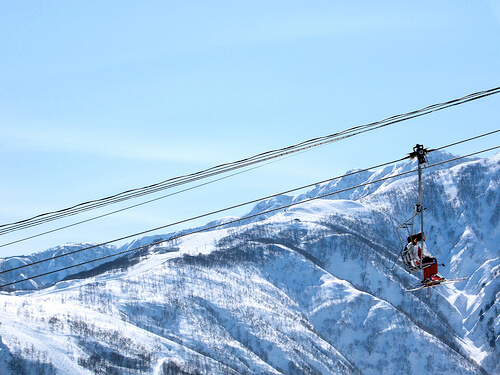
Japan has some of the best skiing in the world with exceptional snow quality and easily accessible resorts with modern lifts and infrastructure. The chance to enjoy uncrowded slopes, soak tired muscles in onsen baths and experience Japanese culture all in one trip makes skiing in Japan a fantastic experience.
We will cover the history of skiing in Japan, when is ski season, where the best skiing is in Japan, best resorts for beginner, intermediate and advanced skiers and snowboarders, micro resorts, getting to the resorts and some tips.
A Quick History of Skiing in Japan
new skis bring increased interest
Skiing in Japan took off in the 1920s when the Austrian Hannes Schneider introduced lightweight skis that allowed faster and more enjoyable skiing. Before that locals in the mountain regions had used heavy pine skis to move about, but these were difficult and tiring to use.
Winter Olympics hosts
Japan hosted the Winter Olympics in 1972 (Sapporo) and 1998 (Nagano), proving to the world that it had world quality slopes and facilities.
popular for both skiers and snowboarders
Skiing was a bit of a niche activity amongst the Japanese until the 1980s, when many resorts invested heavily in infrastructure and skiing became popular with urban dwellers. Snowboarding has also taken off in recent decades, with resorts now offering terrain parks and runs aimed at snowboarders. There are only a few resorts that don’t allow snowboarding, these tend to be the more traditional and family orientated resorts. All the resorts in this article allow both snowboarding and skiing.
When is the Ski Season in Japan?
The snow is usually good enough for resorts in Japan to open in mid to late December. The snow holds until late March or early April, with the best ski weather in January and February. However some resorts with snow canons will open in late October and remain ski-able until March.
High resorts might be able to remain open until late May, with Gassan resort staying open until July. Keep in mind some of the higher resorts are inaccessible during late January and February, so have a split season opening in December, closing and then reopening in March as the roads clear.
Slopes are often busiest at weekends and public holidays – if you can time your visit to be during a normal working week then you are unlikely to find the slopes too crowded.
Where is the Best Skiing in Japan?
There are two main areas for skiing in Japan; the Japanese Alps in central Honshu and the mountains of Hokkaido. There’s even resorts in Kyushu and western Honshu; 80% of Japan is mountainous, so most of Japan is only an hour or two from a ski area of some kind. With over 500 ski resorts across the country, there’s bound to be something to suit your ability and interests. We’ll cover resorts aimed at beginner, intermediate and advanced skiers and snowboarders.
Beginner ski resorts in Japan
Furano and Niseko are some of the biggest resorts in Hokkaido, and offer a wide range of terrain to suit both beginners and more advanced skiers. Perhaps the most attractive reason to pick these resorts is that they offer group lessons in English for both adults and children, perfect for those who are not yet totally confident on the slopes. The resorts also cater well to English-speaking visitors so make a good choice for your first ski trip to Japan.
Furano, Hokkaido
Furano is very family friendly with plenty of children’s activities. It’s also slightly cheaper than similar resorts, so offers good value. There are some limits on off-piste and backcountry skiing at Furano which is worth knowing if your group includes advanced skiers as well as novices.
Niseko, Hokkaido
Niseko is well known for excellent snow conditions, due to its location at the edge of the Siberian weather system. As well as good beginner’s skiing, there’s backcountry routes to keep more experienced skiers happy. It also has great nightlife and restaurants, but can get a little crowded especially around the Christmas and New Year holidays.
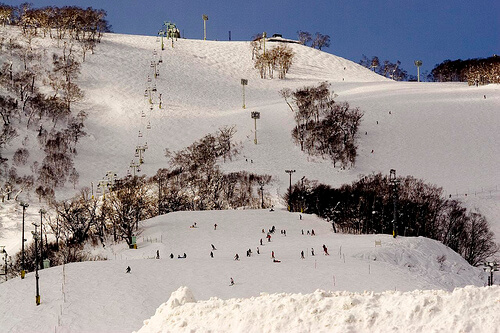
Intermediate ski resorts in Japan
Rutsutsu, Hokkaido
In Hokkaido, Rutsutsu is a good resort for more confident skiers, with reliably good snow conditions. There’s excellent off-piste skiing as well as opportunities for tree skiing and backcountry routes. English speaking guides and coaches are available for private sessions, but most activities will be in Japanese. The main downside to this resort is that nightlife can be a little slow, but that just means more time to relax in an onsen.
Zao Onsen, northern Honshu
Zao Onsen in Honshu is one of the oldest resorts in Japan. Snow freezes on to the trees here creating spooky looking “snow monsters”. The resort is also famous for onsen baths, perfect for soothing aching muscles after a hard day on the slopes. Zao is a great resort for those looking to experience Japanese culture (most hotels here have been open since the 1920s and offer traditional hospitality) as well as some good intermediate level skiing, including a little off piste and backcountry.

Advanced ski resorts in Japan
Nagano, CENTRAL Honshu
Nagano is only a couple of hours away from Tokyo by train and hosted the 1998 Winter Olympics. Nozawa Onsen was one of the host resorts and has some of the best “European style” downhill skiing in Japan. There’s plenty of advanced and off piste routes to keep you busy, as well as English speaking guides and coaches. There are several decent blue runs too, which make this a good choice for mixed ability groups. There’s traditional Japanese restaurants, bars and hot spring baths for apres-ski, but few nightclubs, so party animals might feel a little bored.
Kiroro, Hokkaido
Kiroro in Hokkaido has fantastic off-piste skiing and is relatively uncrowded, making this a perfect resort for advanced skiers. Off-piste is not regulated so you will need to be confident being alone in the mountains; the upside is that you can easily find virgin snow and amazing powder. Snow quality is very good while lifts are modern and efficient. There are several restaurants and bars, but not much in the way of nightlife.
Short on time? Try A Micro-Resort
Due to Japan’s climate, even the smallest slopes can get a good coating of snow in winter. The popularity of skiing amongst the Japanese middle classes in the 1990s meant many local hills and mountains were developed in to mini ski resorts. Usually there are only one or two lifts, and runs can be quite short. However, as these resorts are aimed at locals rather than tourists, they can be deserted during working hours or in less than perfect weather as locals decide to wait for sunshine – perfect for some virgin snow.
These micro-resorts probably don’t have enough to keep you entertained for more than a day, so a road trip around several would provide varied skiing as well as an opportunity to explore Japan. Many also offer night-skiing which can be a fun experience.
As micro-resorts are often nearer to big cities than the main resorts in Nagano, Tohoku and Hokkaido they make a good option for those with limited time. A day trip to a micro-resort is a great way to get a taste of Japanese ski culture without committing to a full winter sports holiday.

Getting to the Slopes
Most major resorts are easily accessible, with shuttle buses running from nearby train stations.
Getting to Hokkaido ski resorts
Look to begin your trip in Sapporo and head on from there. Many international flights arrive into Tokyo, but you can take the Shinkansen from Tokyo to Sapporo especially if you have a Japan Rail Pass.
Getting to Nagano or Nigata ski resorts
The Nagano and Niigata regions can be reached easily by train from Tokyo in a few hours.
Getting to Tohoku ski resorts
The Tohoku resorts can be reached from Tokyo as well, but Sendai makes a good base if you are looking to fly in to the region.
Tips for Skiing in Japan
Rental/Bring Your Own:
- Rental equipment is generally new and good quality, especially in the larger resorts.
- Japanese people tend to be smaller than Westerners, so if you have very big feet then it is worth booking boots ahead of time or bringing your own – especially at smaller resorts where the selection may be limited.
- Rental in very small resorts can be expensive and the equipment quite old. If you plan to ski in smaller resorts consider bringing your own gear.
Ski Pass/Costs:
- Skiing in Japan is often cheaper than comparable resorts in Europe. Many resorts will sell passes by the hour, meaning you can get short trips for great value. A day lift pass is usually about ¥4,000-10,000 (around US$32 to US$80).
- Sometimes buying a 2-3 day pass gives you a saving per day over individual day pass tickets.
- Only the larger resorts offer electronic chip passes and weekly/season tickets. Local resorts usually have paper day tickets.
- Look out for discounted lift pass offers in local convenience stores, on the resort website and at the start and end of the season.
Other Tips:
- Bigger resorts will also offer sledding, snow tubing, snow bikes and snow-mobiles if you don’t feel like skiing for the whole time.
- Visit for up to date information on individual resorts and weather conditions.
- Japanese resorts often play pop music over loudspeakers on the piste; just one of the many things that make skiing in Japan a unique experience!