One of the best ways to experience traditional Japanese culture is to stay in a ryokan. Ryokans can vary from tiny houses with two or three rooms to large complexes that resemble modern hotels. As well as providing a bed for the night, dinner and breakfast are often included in the price. Onsen baths and hot springs are other common features, and it is well worth planning to arrive early to make the most of this.
How to book your stay at a Ryokan
Book with specialist Ryokan sites Or Direct
You can book through Ryokan association websites such as Japanese Guest Houses or Jalan. Some of the larger or more modern ryokans might have a website where you can book directly.
Communicate clearly if booking direct
One thing to remember when booking a ryokan is that the owners might not speak much English. Communicating via email is often easier than telephoning, and you should keep your messages short and clear. This is particularly the case with smaller, family-run ryokans. If you have complex or particular needs, booking through the Ryokan associations is the best idea, as the association staff can help relay your message to the Ryokan owners.
Arriving at the Ryokan
What time to arrive at the Ryokan
As a ryokan stay often involves dinner, you should aim to arrive reasonably early to have time to settle in before eating. Arriving around 2-3pm is normal, although some ryokan will specify a time to arrive, which you should stick to.
What is the etiquette when entering a Ryokan?
On arriving, you will often notice a small step up to the reception area. This area might also have small stools or cushions to sit on. Usually, this is a clue: you should remove your outdoor shoes before stepping up onto the tatami mats or reception area. There might also be sandals or slippers in this area. If they are on the lower step, these are outdoor shoes for guests wishing to visit the Ryokan garden, and you should leave your outdoor shoes next to them. If they are on the tatami mat, then they are indoor slippers you can wear around the indoor areas of the ryokan. Do not worry if you get mixed up, as the Ryokan hosts will correct you – they are very used to foreigners not knowing which shoes to wear!
Your shoes will be taken away by the hosts and stored somewhere safe until you are ready to go out again. You might like to wear socks or have some ready to put on, as the Japanese do not tend to walk around with bare feet.
Checking in at the Ryokan
Introduction and a small snack
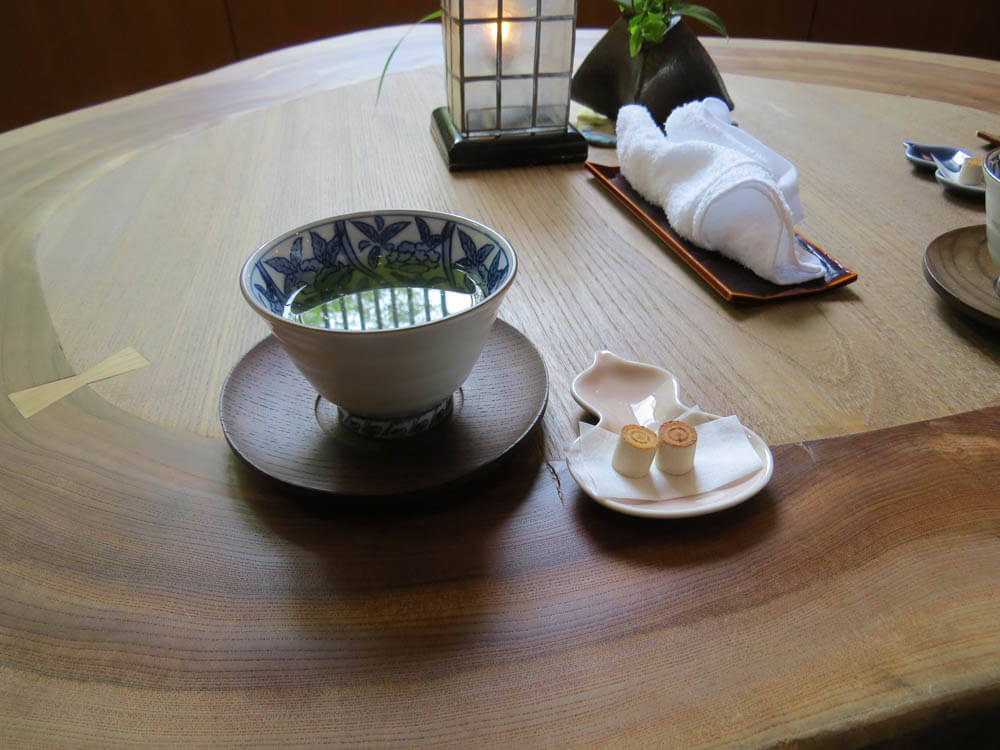
Once the reception desk has found your booking, you will be taken to a lobby area where the hosts will serve you tea and a small snack. This is usually a traditional Japanese sweet or biscuit. While you enjoy the tea, the host will go through any information you need to know (smaller ryokans where little English is spoken may have an information booklet for you to read instead) and make your reservations for dinner and breakfast.
Dinner and Onsen options
Dinner is usually relatively early (6-7pm), as is breakfast (7-8am). Often, there is no choice of dishes for dinner and breakfast, so make sure you have emailed ahead with any dietary needs or allergies you might have and remind your host of this when arranging your meal times.
Many ryokans will provide you with a yukata (light cotton robe) to wear around the building. Check out the Yukata guide here if you need help putting this on, or ask your host to help you.
If an onsen is available at the ryokan, the host will give you the opening hours for the bath. There might also be a private bath that can be reserved, so if you are interested in this, make sure you ask the host to book you a time slot.
The Room
Should you stay in a western or japanese style room at a Ryokan?
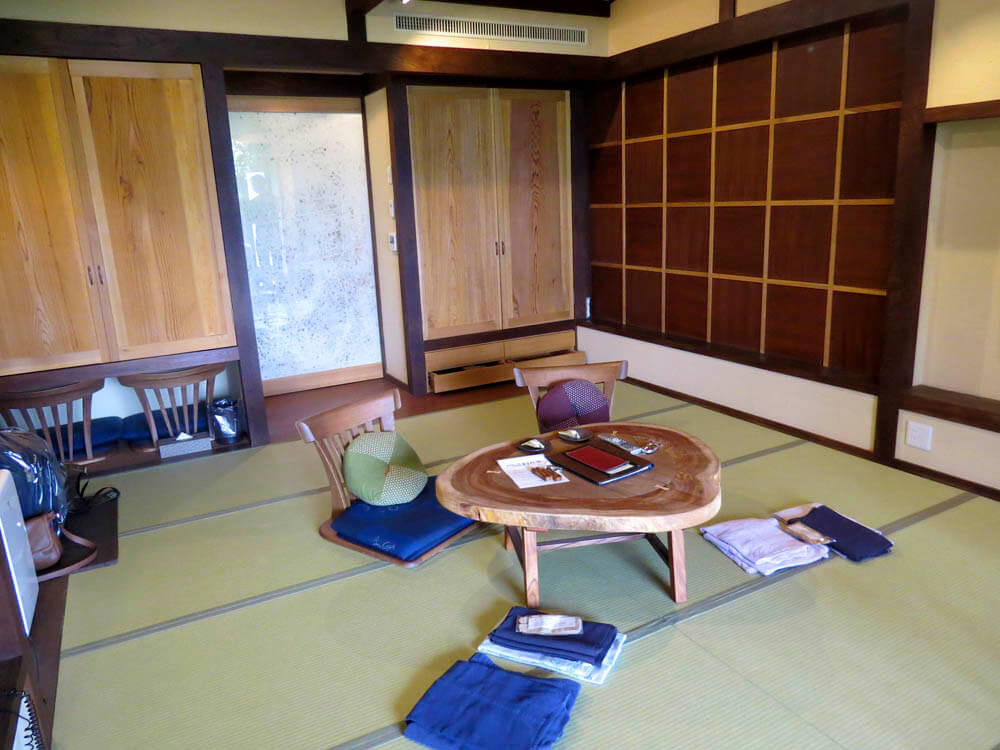
Ryokans offer Japanese, Western and mixed rooms. A Western room will have a bed with a mattress and standard Western furniture. The decor might also be Western style. A Japanese-style room will have a futon bed, low tables and floor cushions to sit on. The floor will be tatami mats, and the decor will be Japanese, with an alcove and traditional artwork on display.
A mixed room usually has Japanese decor with a Western bed and furniture, although these will often be themed to look more in keeping with the Japanese style. A mixed room is a good choice if you wish to experience Japanese culture but have back pain or other health problems that might prevent you from sitting and sleeping on the floor. Otherwise, a Japanese room is highly recommended and is much more comfortable than you might expect.

Etiquette when using bathrooms in Ryokans
Many modern ryokans have en-suite bathrooms, but in the older ones, you might have to share a bathroom with other guests. There will often be a pair of special slippers in the bathroom to prevent any dirt on the bathroom floor from transferring to the tatami mat. Remember to leave your indoor slippers on the mat, step into the bathroom slippers, and change back as you exit the bathroom.
Once your host has left, change into your yukata, visit the onsen bath or gardens and relax until it is time for dinner.
Dinner
In most ryokans, the guests will wear their yukatas to dinner. Dinner is sometimes served in your room (especially if you have chosen to stay in a Japanese room) or in a private dining room. Some ryokans will have larger communal dining rooms. You can often choose whether you want a Japanese-style table where you sit on the floor or a Western-style table. It may also be possible to get a sunken table, where a pit is cut underneath the table, allowing both Western-style sitting and traditional Japanese kneeling.
What is the style of cuisine served in Ryokans?
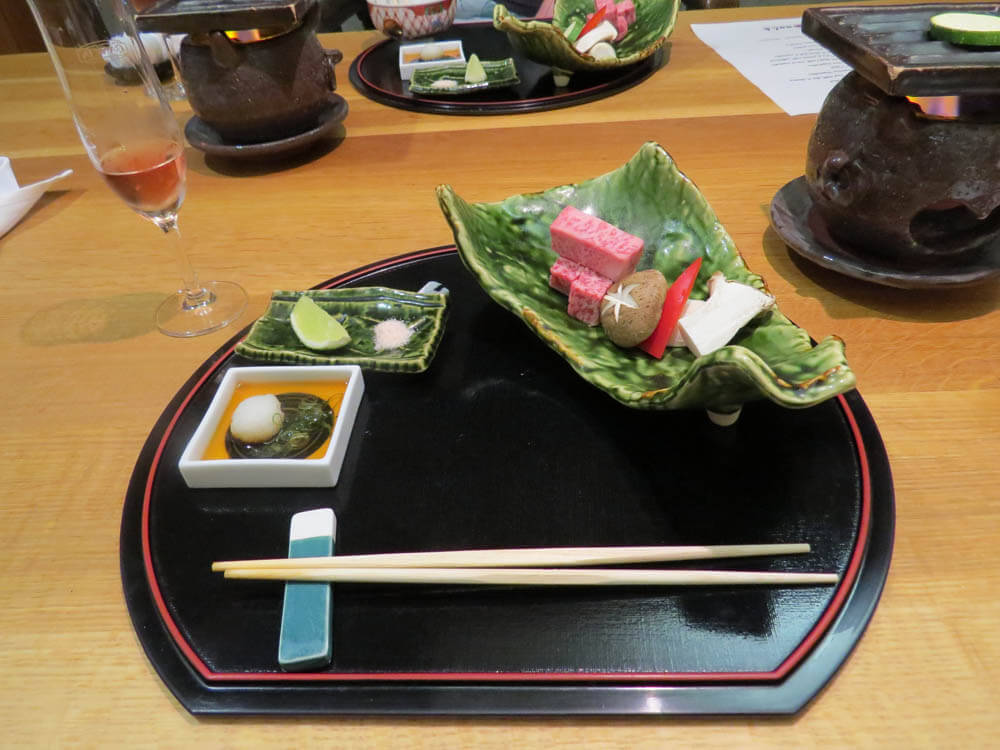
The style of cuisine called kaiseki ryori is often served in ryokans. This is an elaborate, multi-course meal that reflects local seasons and delicacies. The dishes served are usually small, so don’t worry too much if you don’t like one of them, as there will be several others to try as well. Presentation is as important to Japanese cuisine as the taste, so expect beautiful arrangements of food on carefully chosen crockery.
See our page on kaiseki ryori for more information on the type of food to expect.
What drinks are served with a Ryokan dinner?
Water or tea is often served alongside dinner, although some ryokans may offer a small cup of sake or local wine as an aperitif at the start of the meal. If you wish to drink alcohol or other soft drinks, these will be charged as extras to your bill.
Bedtime
While you eat, a transformation happens back at your room
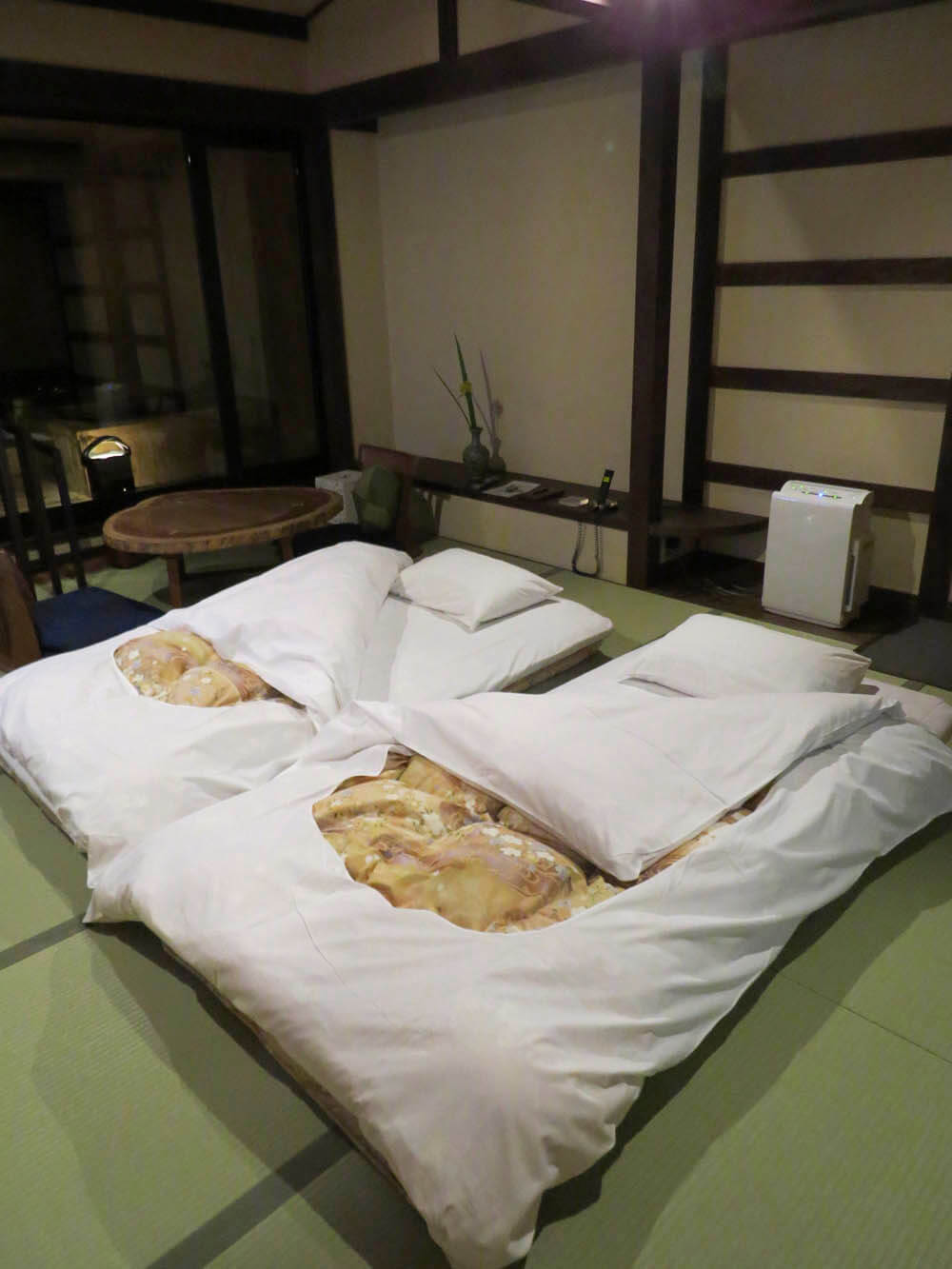
While you are at dinner, a maid will visit your room, move the table and chair cushions to the side and set up the futon on the floor. Futon mattresses in Japan are much thicker than ones you might have tried in the UK and are far more comfortable than you might expect. However, if you are worried about sleeping on the floor, you can ask to have two or more futons laid out on top of each other to provide more cushioning. There will often be spare futons in the large cupboard in your room, so you can always add extra ones yourself if you find it too uncomfortable.
Bedding
The maid will also put a duvet and a pillow out for you. The duvets are similar to those in the UK, but again, you can ask for extra blankets if you are worried about being cold at night. The pillow is traditionally filled with rice husks, which makes it more like a bean bag than a feather pillow. This can take a bit of getting used to. The best strategy is to shape the pillow to hold your head comfortably, then try to stay still and relaxed. Unlike feather pillows, the pillow does not reshape as you move your head, so the less you move, the better! Some ryokans might have feather or foam pillows you can use instead, but you can always improvise with a travel pillow or a folded jumper if you decide to try a rice pillow and find you can’t get comfy.
Pyjamas and toiletries
Many ryokans will provide you with pyjamas to wear – this might be a thin, plain yukata or trousers and a wrap-around shirt. Ryokans (and Japanese hotels in general) are also very generous with the toiletries provided in the room. As well as shampoo and shower gel, many will supply toothbrushes and toothpaste, hairbrushes, razors, hair gel and moisturiser. It is possible to turn up to many ryokans with no luggage and still have a very comfortable stay.
Breakfast
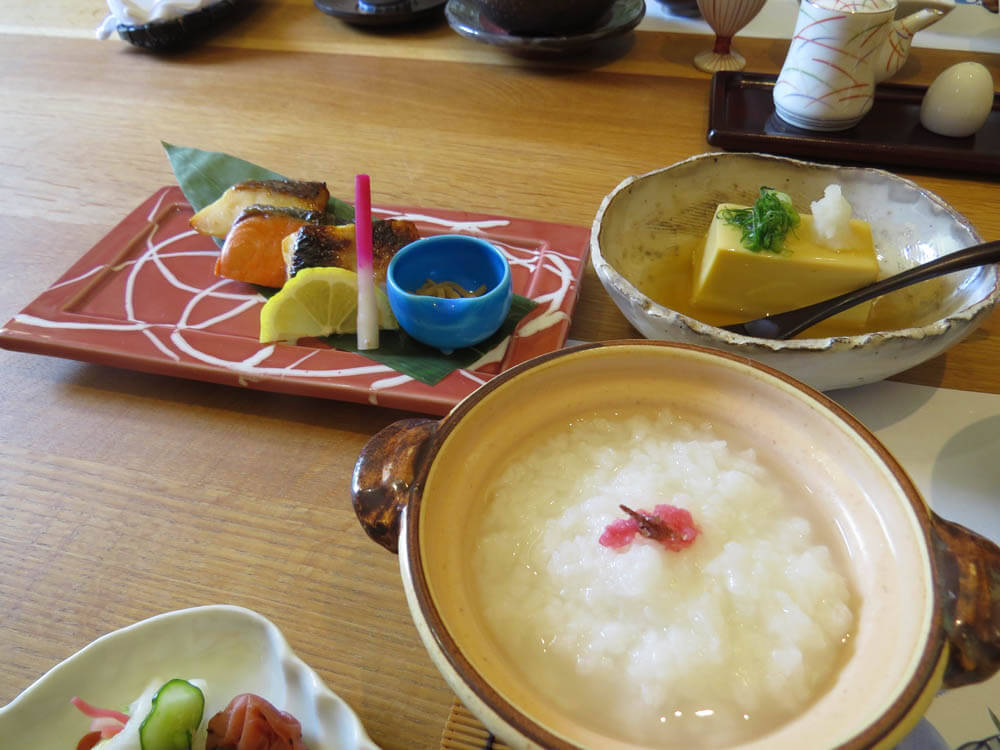
Some ryokans will provide a choice between a Western and Japanese-style breakfast. Western breakfasts usually involve bread with butter and jam and maybe an egg or ham. This can be a hit or miss, depending on the ryokan.
What is a typical Ryokan breakfast?
Japanese breakfasts usually consist of rice, miso soup with vegetables and tofu, fish and pickles. Upmarket ryokans might provide a very extravagant breakfast, while cheaper ones may provide the basics. While a Japanese breakfast might seem hard to swallow at 7 a.m, it is surprisingly delicious and filling and worth trying at least once in Japan.
Japan Trip Recommends
The photos used on this page were taken during a stay at Gora Hanaougi, a ryokan in Hakone.